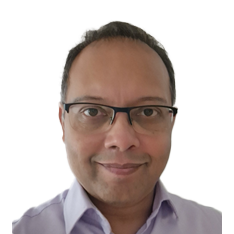
























Dr Aklak Choudhury, clinical director for RCP Improvement, is a respiratory physician and medical director for improvement, innovation and research at University Hospitals of Derby and Burton NHS Foundation Trust. He reflects on some of the sessions that he attended at our recent RCP Medicine 2026 conference, and on the opportunities that they highlight for improvement work.
I had the opportunity to attend many excellent sessions at Medicine 2026, and wanted to reflect on some of them through the lens of meaningful quality improvement. What follows is my attempt to tease out the improvement opportunities presented by three of those sessions and share them with you.
Analogue to digital – AI in NHS healthcare
A thought-provoking opening session explored the role of artificial intelligence (AI) in the NHS and was chaired by the RCP’s digital health clinical lead, Dr Anne Kinderlerer.
Professor Alastair Denniston, chair of the UK National Commission on the Regulation of AI in Healthcare, challenged us to make informed decisions grounded in evidence that should not be driven by ‘imagination’, ‘extrapolation’ or ‘desperation’. I’ll openly admit that AI still occasionally brings back memories of the ominous Skynet taking over the world in the Terminator films, from nearly 40 years ago!
Alastair described a particularly powerful concept; the ‘value intersect’ for AI in the NHS, a Venn diagram focusing on:
- What do we need AI for?
- What is AI good for?
- What are we ready for?
The overlap between these areas for the NHS is currently small, but is expected to expand rapidly in the coming years.
Understandably, AI is seen increasingly as a solution to complex NHS challenges, but we are not there yet. Key areas still requiring significant work include how AI is regulated, organisational readiness for AI, digital infrastructure, EPR (electronic patient record) integration, data privacy and how we tackle the minefield of clinical liability.
There is also a real risk of becoming overly solution focused, where AI is seen as the default answer to every problem – potentially leading to poorly judged, top-down digital implementations. Physicians have a crucial leadership role in ensuring that AI is introduced safely, appropriately and meaningfully within our departments.
For successful AI adoption in clinical areas, we should follow a grounded improvement approach. This starts with defining and understanding the local problem, before even considering whether AI has a role. Then we can co-design what good looks like, with the wider multidisciplinary team (MDT) – using iterative testing of AI/digital solutions to deliver in real clinical environments and ensuring a clear plan for sustainability. All this must be underpinned by robust governance and regulation.
We ran a recent RCP Improvement workshop to explore how physicians can better navigate these improvement steps – and what their role is in supporting meaningful improvement that impacts on patients’ experience. Read our RCP view on digital and AI to find out more about this fast-developing area.
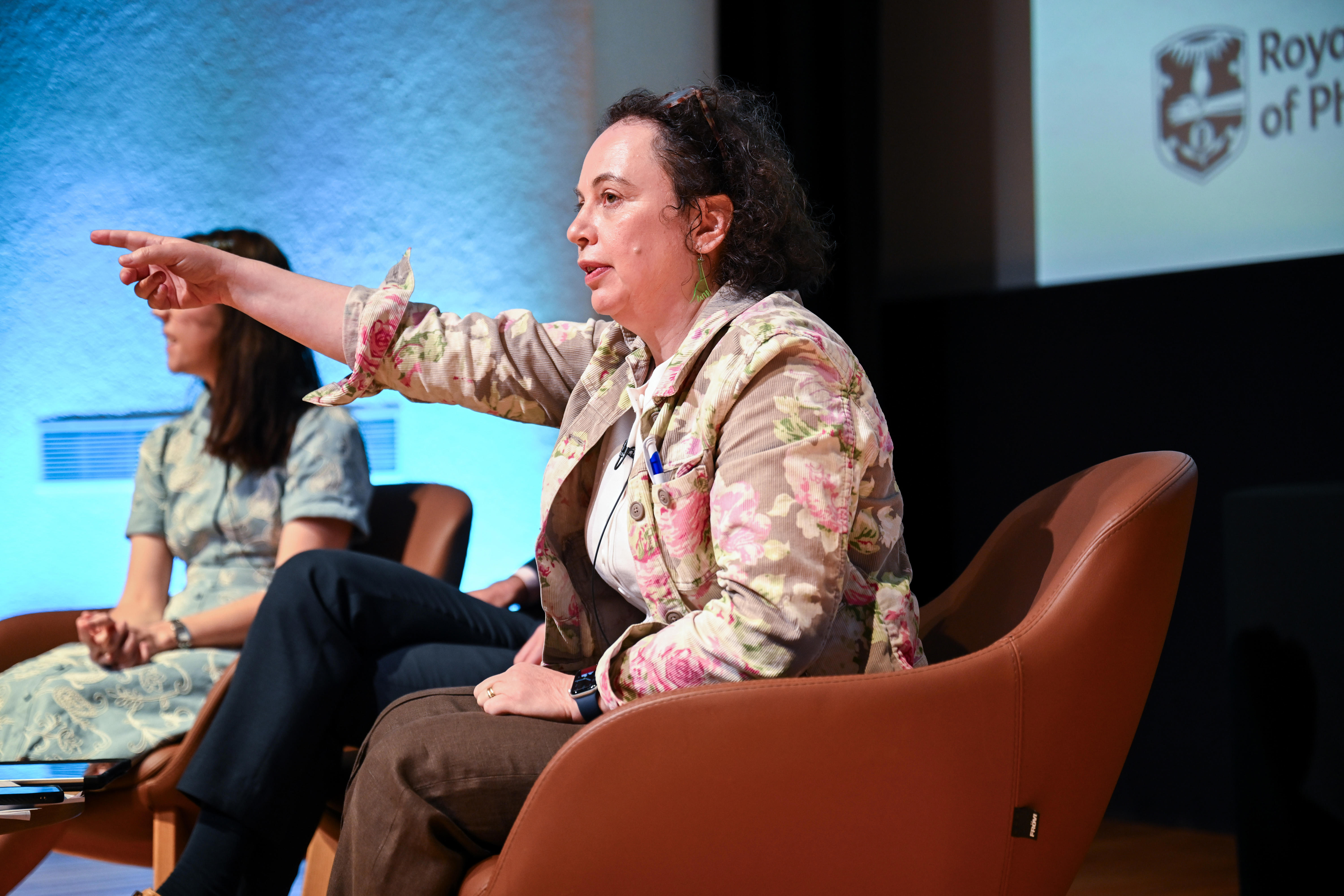
Image: Dr Anne Kinderlerer speaking at Medicine 2026
Hospital to community – neighbourhood health in focus
On to day two, which was an eye-opener for both challenges and opportunities for neighbourhood health. The session was chaired and facilitated by Dr Hilary Williams, RCP clinical vice president.
Dr Nicholas Hicks set the scene with the National Neighbourhood Implementation Programme definition of neighbourhood health:
‘At its heart, neighbourhood health is about bringing care closer to where people live, strengthening prevention, and making sure services are joined up across the NHS, local government, social care and the voluntary sector.’
He discussed the Fit for the Future: 10 Year Health Plan for England, outlining as expected the three ‘left shifts’ – from hospital to community, from sickness to prevention and from analogue to digital. He also highlighted two broader themes running through the plan: a ‘shift to value’ and the ‘devolution of power’. Together, these may prove to be the key enablers for neighbourhood health, giving communities permission to innovate around the problems that matter most to them.
Dr Emma Rowlandson, an acute physician at West Middlesex University Hospital with an interest in integrated care, shared a compelling example of how specialty MDTs can reduce the burden of traditional outpatient appointments. Her experience working at the interface of acute and community care has been effective, but also enjoyable. She encourages more physicians to get involved.
Dr Elizabeth Macphie, consultant rheumatologist at Lancashire and South Cumbria NHS Foundation Trust, shared how rheumatology services have embraced neighbourhood health; from community-based diagnostics and infusion suites to virtual specialist MDTs and their work in developing a shared care record. Her work highlighted how specialist care can be delivered safely and effectively outside hospital walls.
The conversation about neighbourhood health did not end there. We gathered with the speakers in the Osler Room to reflect on how neighbourhood health could reshape physician practice for the better. Ideas ranged from immediate practical steps – such as building a repository of physician-supported neighbourhood health initiatives on the RCP website – to more ambitious proposals, including a joint royal college breakthrough improvement collaborative.
Read the RCP view on neighbourhood health: planned specialist care to learn more about how physicians are delivering care closer to home.
Modern acute medicine: prevention, innovations and better decisions
Our acute medicine closing session for the conference was chaired by Dr Ben Chadwick, RCP deputy registrar.
An AI-generated image of a ‘patient conveyor belt’ lingered in my mind. In our drive to streamline pathways and eliminate waste, we have lost the person-centred care (and value) that we once intended. Most of us have experienced this first-hand; lots of investigations, but very little conversation with our patients about what they want.
When we describe waste in improvement work, we often draw on Ohno’s eight wastes. Below are some examples of how the pursuit of efficiency can inadvertently create waste along the patient journey.
- The ‘just-in-case’ bloods taken on arrival in the emergency department, before a patient history has even been taken: ‘Let’s do a D-dimer now, it’ll save time later.’ This is classic overproduction on the waste wheel.
- Early assignment into diagnostic boxes to move patients quickly to the perceived ‘right’ area: ‘They’ll work out what’s wrong with you once you get there’. This leads to overprocessing, unnecessary motion, transport and underutilised staff resources.
- Multiple specialty inputs with no single care plan, no ownership and no coherent narrative: An example again of underutilised staff resources, motion and overprocessing.
Do we need a ‘pause moment’ in medicine?
Dr Vicky Anne Price, consultant in acute medicine at Liverpool University Hospitals NHS Foundation Trust, spoke about her experience of recognising end of life in the acute medical setting. She described the importance (and courage) to care differently. In 2023, 6.2% of all deaths in England had three or more emergency admissions in the last 90 days of life. Yet the conveyor belt rarely pauses long enough for us to recognise and intervene.
Where in our acute care pathways do we pause to ask:
- Is this person approaching the end of life?
- What matters most to them right now?
- Where and how would they prefer to spend the last few months ahead?
These conversations about uncertain recovery and patient choice are essential. Without them, patients are swept along a system designed for diagnosis, acute management and escalation – not for reflection or person-centred decision making.
We need to create a space to ‘step off the conveyor belt’ and build ‘pause moments’. These are structured opportunities to slow down (or stop) the process, look at the person in front of us, and offer them the chance to be cared for differently.
RCP Improvement has been working on acute management of end-of-life care, emphasising earlier recognition, better communication and truly person-centred MDT planning. We will share some of the outcomes of this work, so we can add value where it matters for people coming towards the end of their lives.
Taking away a lesson
Looking back on Medicine 2026, what stays with me is not a single innovation or headline, but a shared challenge: to think differently about how we improve care. Whether the focus is AI, neighbourhood health or acute medicine, the opportunity is the same – to start with the real problem, work alongside patients and colleagues, and make changes that add value where it matters most.
If we can hold on to that improvement lens, then physicians have a vital role in shaping services that are not only more efficient, but also more considered, connected and person centred.
Dr Aklak Choudhury
Clinical Director for Improvement Programmes